

i. Introduction
How public sector agencies are building scalable, resilient, flexible, and future-ready cloud ecosystems for the Age of AI (and beyond).

ii. What is Ecosystem Oriented Architecture?
Let’s begin with the core principles of EOA. Think of these principles as “lenses” through which ecosystem architects, technical leaders, and decision makers should consider their architectural choices and investments. In other words, the best ecosystem architects will consider thoughtfully and apply these principles consistently across the organization’s entire cloud estate or ecosystem. T
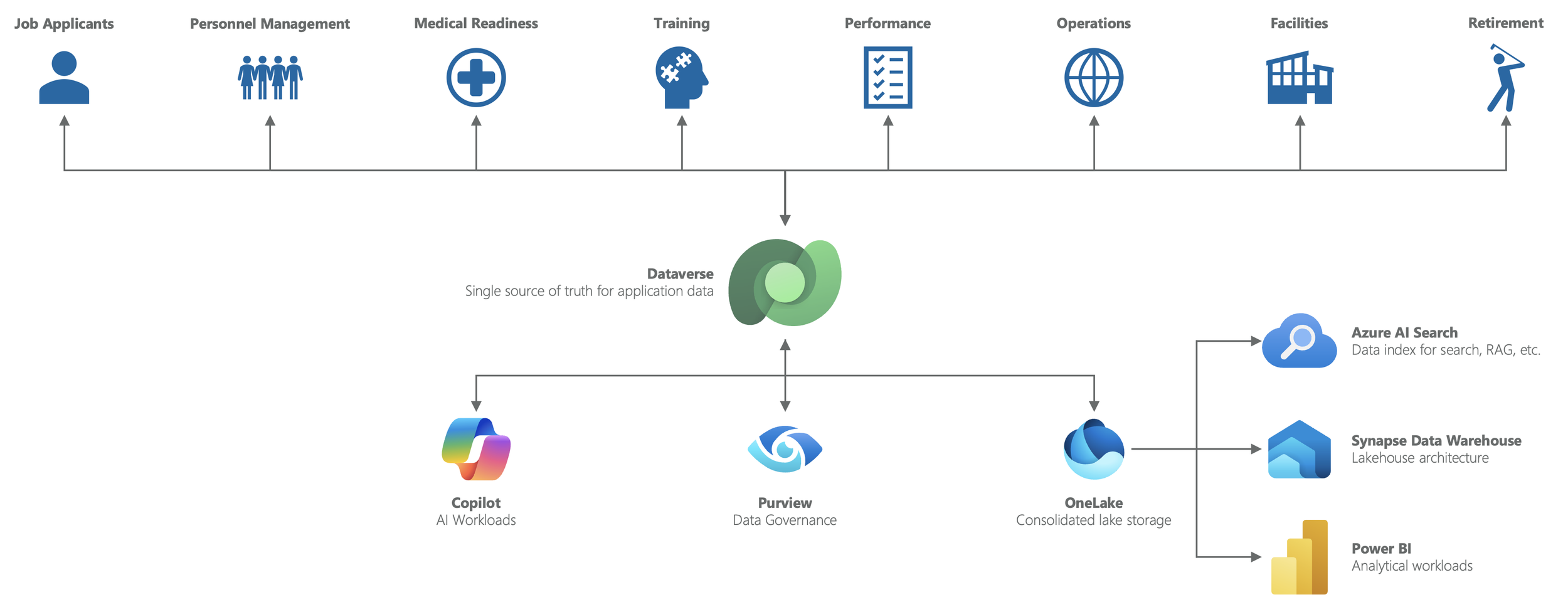
iv. Applying EOA in Real World Public Sector
Here we show an assortment of workloads common across many public sector organizations. These workloads have grown over time as point solutions implemented largely in isolation of one another. Their specific data storage technologies differ between organizations, but I’ve used a combination of Excel, SAP, proprietary databases, SharePoint lists, MySQL, and SQL Server to provide a representative sample.
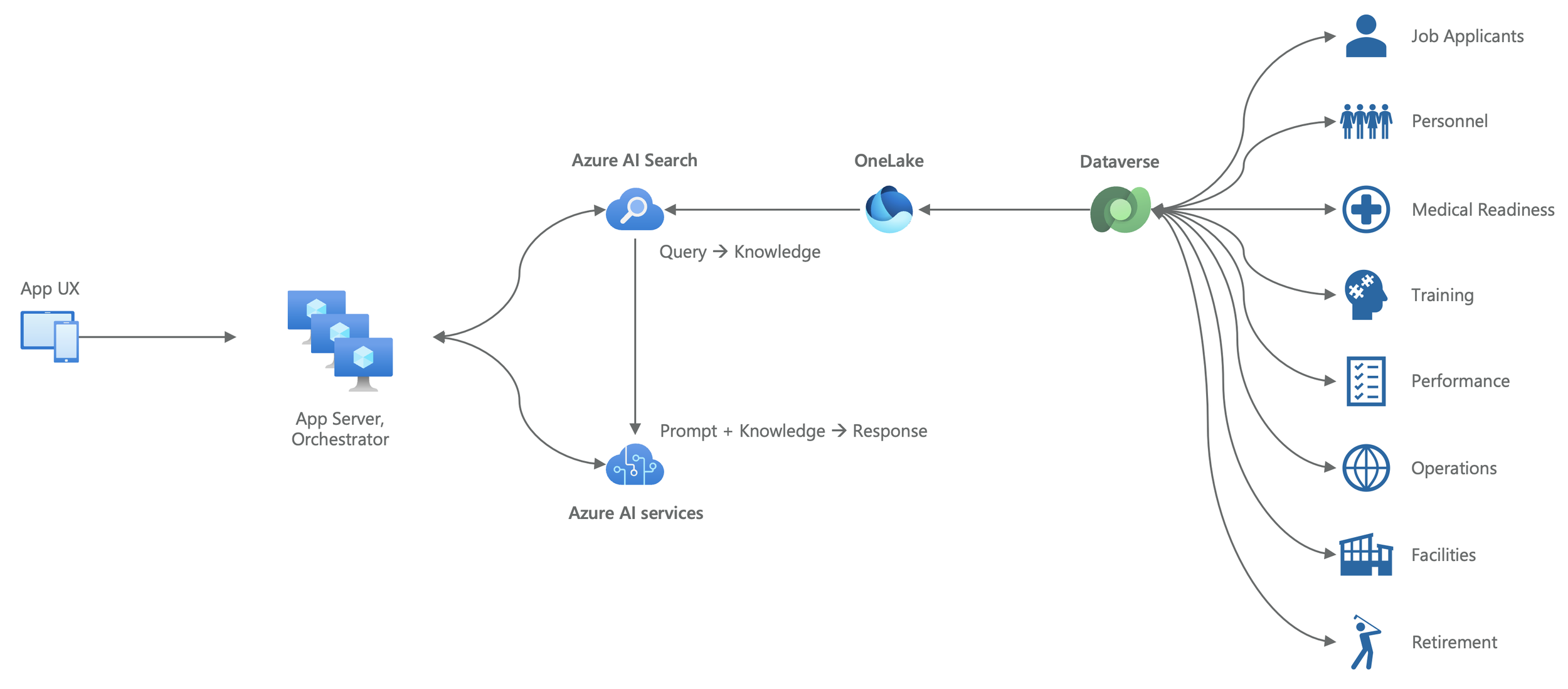
v. A Future-Ready Public Sector
We’ll conclude by exploring how EOA equips organizations to leverage artificial intelligence, in particular, AI acting on an agency’s own data. The diagram below reshuffles the various workloads from our earlier example. On the right we have the collection of Tier 1 “core business systems” discussed at length above, all atop Dataverse as their application data service.